Mobile route platforms

Commercial Bin Cleaning Trailers

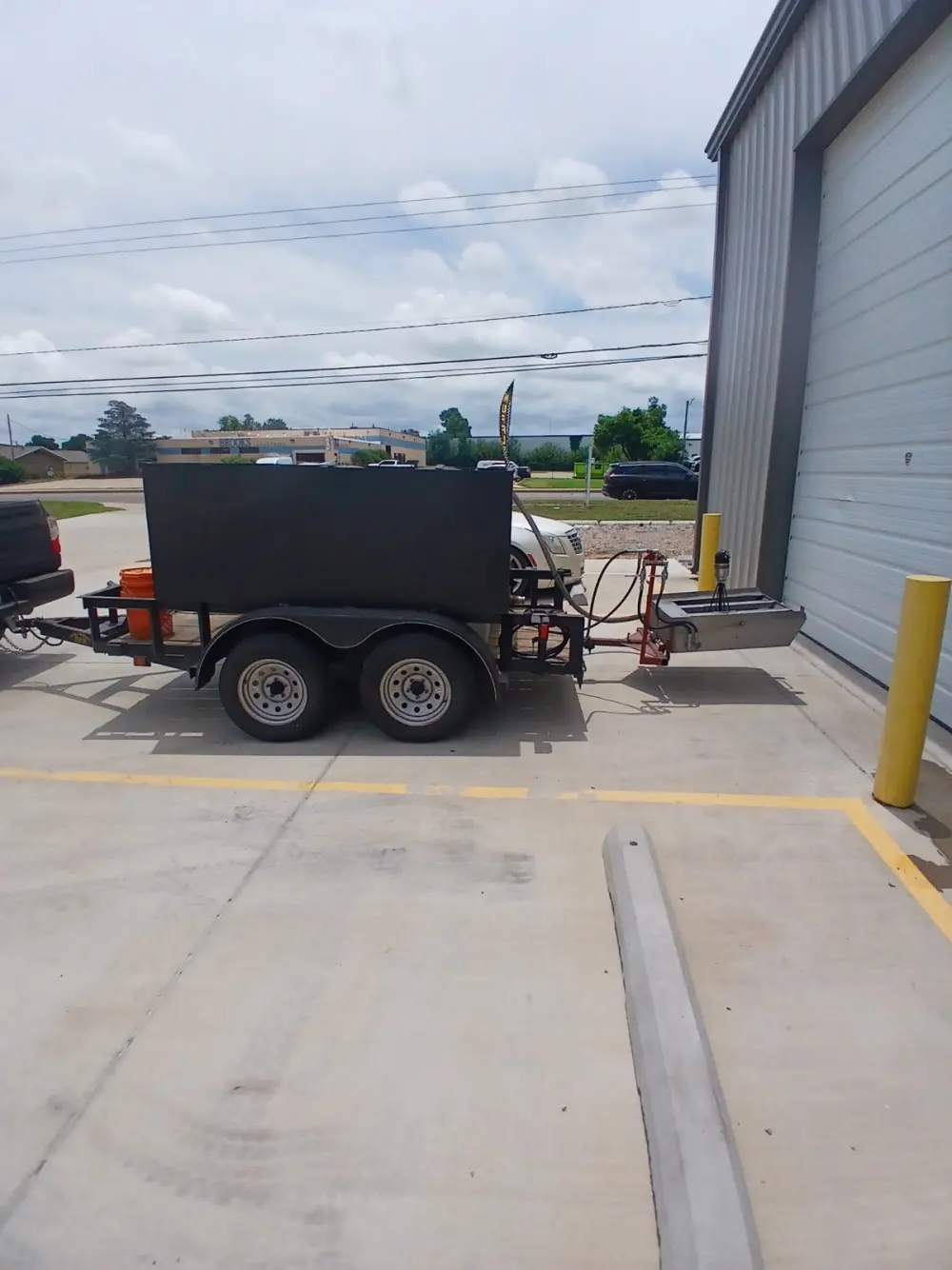
Purpose-built trailer systems that combine the cleaning platform, water system, and road configuration for mobile bin-cleaning work.

Start with the route

Size the trailer around a real route.

Compare cleaning bays, water temperature, tank configuration, loaded towing requirements, and refill or disposal time before choosing a trailer.

Bring these answers

Tow vehicle and hitchLoaded route weightSingle or double bayHot or cold waterFresh- and wastewater capacityApproved disposal process

Current Kraken lineup

Compare the visible configuration.

Prices are starting points. Final specifications, compatibility, freight, and availability are confirmed in a written quote.

Kraken Trailer Combo (Double)
Maximum throughput

Kraken Trailer Combo (Double)

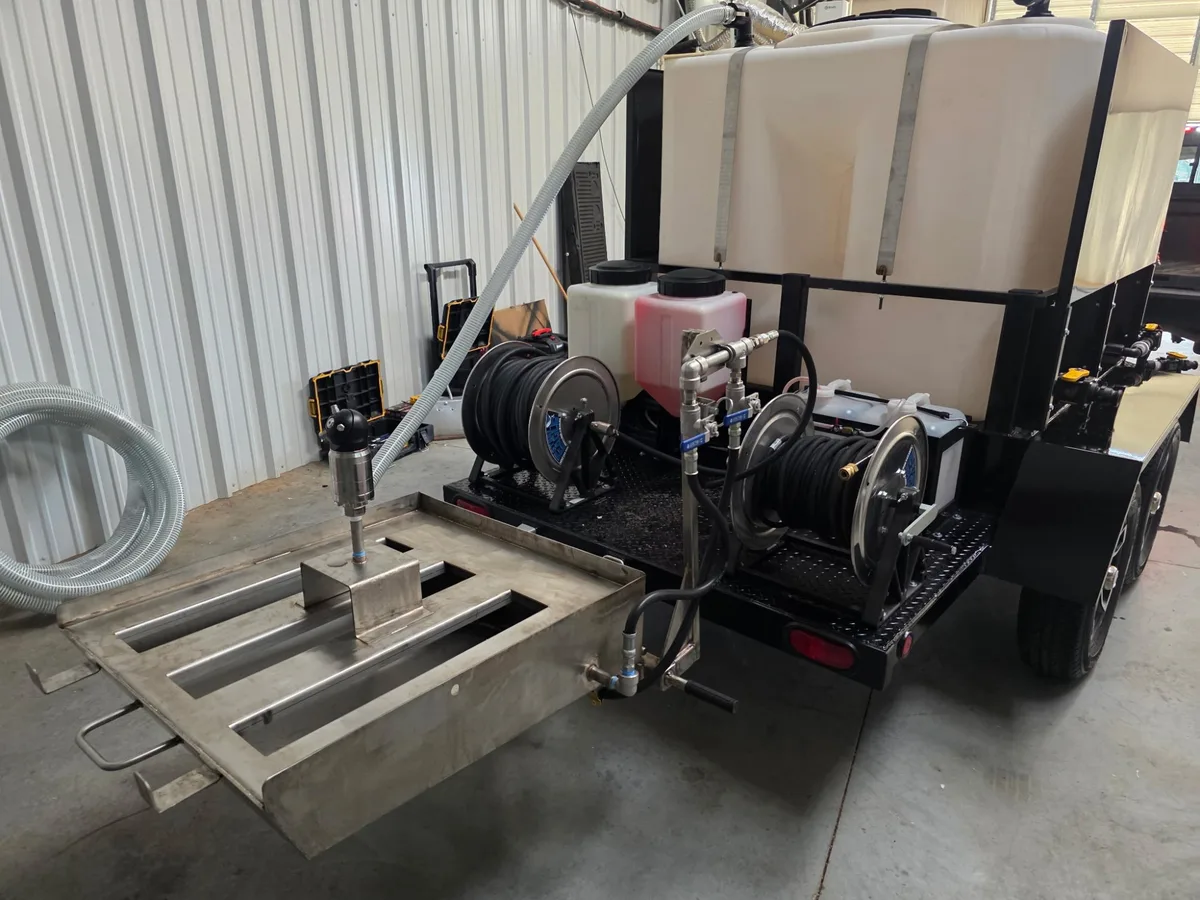
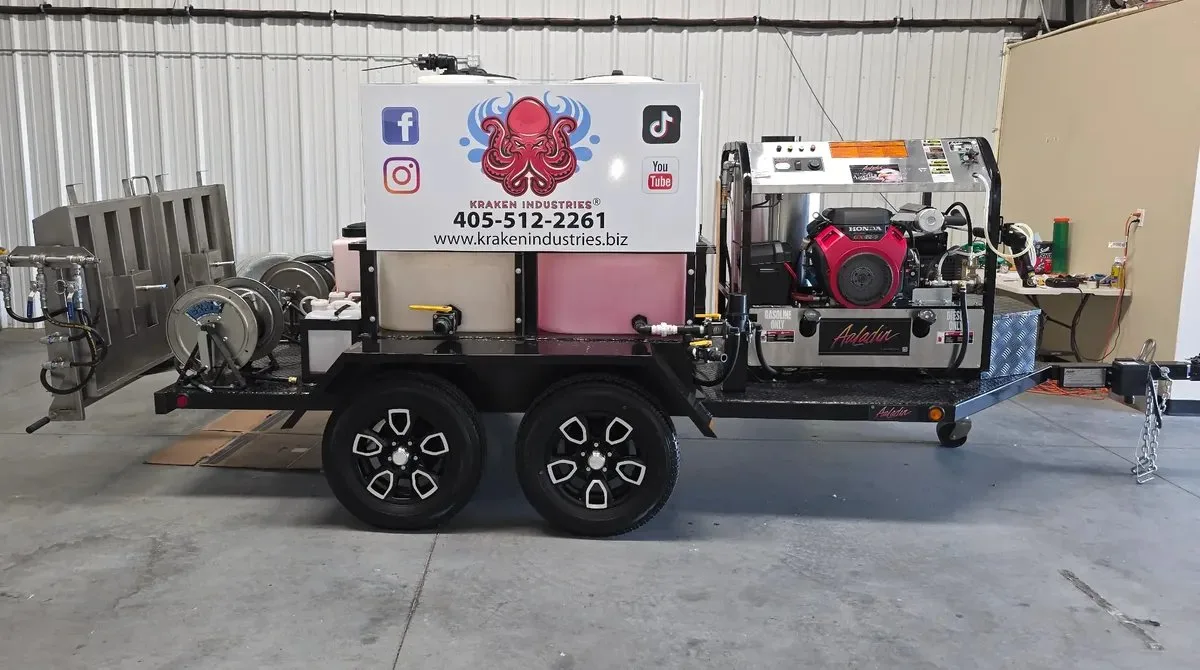
Two cleaning bays, hot water, dual 250-gallon tanks, and a launch-ready trailer built for high-throughput routes.

Cleaning bays
Two
Water temperature
Hot water included
Tank configuration
Dual 250-gallon tanks
Road configuration
Street legal and titled
Kraken Trailer Combo (Single)
Complete mobile system

Kraken Trailer Combo (Single)

A complete mobile bin-cleaning business in one purpose-built trailer with hot water and a 250-gallon tank.

Cleaning bays
One
Water temperature
Aaladin hot water
Tank capacity
250 gallons
Platform
Purpose-built trailer
From $39,999View system
Eco Kraken Cold Water
Lean trailer setup

Eco Kraken Cold Water

A focused cold-water trailer with dual 250-gallon tanks and the essentials for professional bin cleaning.

Cleaning bays
One
Flow
5.0 GPM
Water temperature
Cold water
Tank configuration
Dual 250-gallon tanks

Application fit

Start with the work, not the option list.

These operating patterns expose different vehicle, water, handling, capacity, and support requirements.

Single-bay route

A single cleaning position can suit an owner-operator who values a simpler layout and whose measured route capacity does not require parallel handling.

Double-bay route

Two bays can support higher stop volume when water, recovery, crew handling, parking, and customer density are not the actual bottlenecks.

Hot-water work

Heat adds capability for certain residue and commercial work but also adds fuel, service, winterization, and operator procedures.

Cold-water operation

A cold-water build can reduce system complexity when the service mix, cleaning process, and local requirements do not justify heat.

Selection sequence

Move from operating plan to written configuration.

A disciplined sequence keeps expensive options from hiding unresolved vehicle, water, facility, or route questions.

  1. 1

    Map collection days into a compact weekly route and estimate normal bins per stop.

  2. 2

    Measure the tow vehicle ratings with passengers, supplies, hitch load, and the trailer at operating fill levels.

  3. 3

    Model both fresh-water depletion and recovery accumulation; use the first limit as the route constraint.

  4. 4

    Check turning, parking, backing, storage, fill, discharge, and winterization locations.

  5. 5

    Confirm the exact titled trailer, equipment list, loaded estimate, support terms, and delivered price in writing.

Due diligence

Resolve these items before the build is final.

  • Tow rating, payload, GCWR, hitch class, tongue weight, and brake-controller requirements
  • Trailer axle ratings, tires, brakes, lights, breakaway equipment, title, and registration
  • Fresh and wastewater tank sizes plus usable operating reserve
  • Single-operator access to controls, hoses, debris, filters, and service points
  • Storage dimensions and protection from freezing or unauthorized access
  • Freight, delivery inspection, operator orientation, warranty, and parts support

Buyer answers

How much does a bin-cleaning trailer cost?+

Cost changes with the trailer platform, one or two bays, hot or cold water, tanks, pressure system, controls, accessories, and options. Compare delivered configurations rather than a headline price.

What tow vehicle is required?+

The answer depends on the exact trailer and loaded operating condition. Confirm tow rating, payload, GCWR, hitch, tongue weight, braking, passengers, supplies, and local requirements for the final build.

How many bins can a trailer clean per fill?+

Divide usable gallons by measured gallons per completed bin, then check recovery capacity and reserve. Pump GPM or tank nameplate capacity alone cannot answer the question.

Is a double-bay trailer always faster?+

No. It improves throughput only if bin staging, operator count, water, recovery, and route density let both bays contribute to completed stops.

Configure the system

Tell us how the route needs to work.

Kraken will help match the platform, cleaning bays, heat, capacity, and options to the stated operating plan.

Request a quote